



Five Radical Documentaries by Kazuo Hara and Sachiko Kobayashi (Eclipse Series 49)
Shocking, confrontational, and made with white-hot fury, these radical documentaries—directed by Kazuo Hara and produced by his wife and longtime creative partner, Sachiko Kobayashi—give voice to the outsiders and iconoclasts who wage war against the conformism of modern Japanese society. From a woman willing to risk everything on her journey toward personal and sexual liberation (Extreme Private Eros: Love Song 1974) to a man whose quest to expose Japanese wartime atrocities borders on madness (The Emperor’s Naked Army Marches On), the unforgettable subjects of these films are invited to be collaborators in Hara and Kobayashi’s process, resulting in works of unmatched power and immediacy.
Goodbye CP
An early documentary to portray the experiences of disabled people with compassion and complexity, Kazuo Hara’s searing debut is also one of the most unflinching films ever made about what it means to be an outsider. Produced in collaboration with the Green Lawn—a group of activists with cerebral palsy—Goodbye CP blends shot-on-the-fly footage of the members’ seemingly Sisyphean struggle to take their message to the streets with raw, sometimes confrontational interviews in which they reveal the torment of living in a society cruelly indifferent to their existence. In making his subjects active participants in the film—a practice he would continue—Hara powerfully asserts the humanity and agency of those who have long been denied both.
Sennan Asbestos Disaster
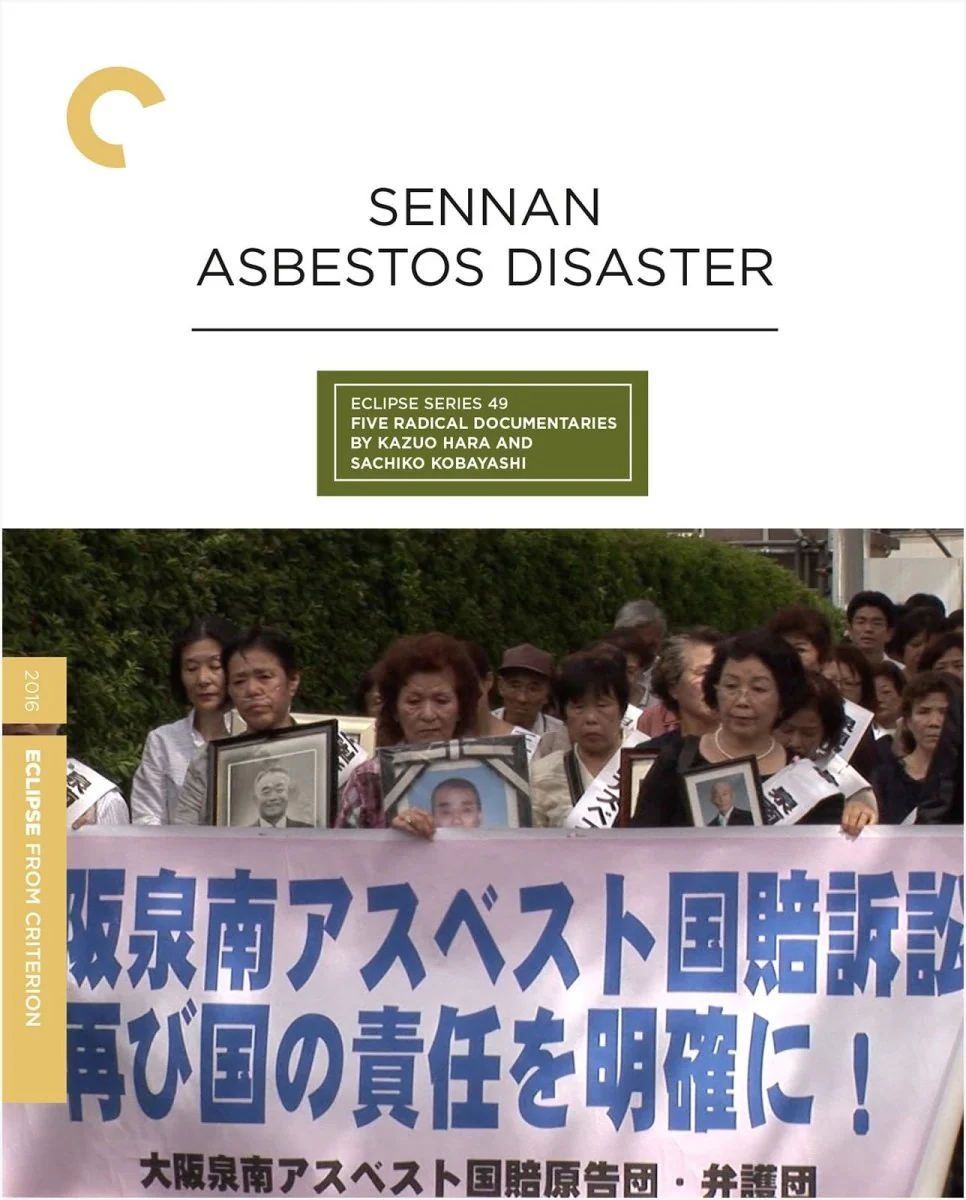
Made over the course of ten years, this epic work of activist cinema joins the citizens of Sennan, Osaka, as they embark on an uphill legal battle to receive reparations from the government for exposing them to the deadly toxins of the city’s asbestos factories. Through wrenching interviews with the victims, Sennan Asbestos Disaster paints a damning portrait of how decades of negligence exacted a devastating toll while revealing how the tragedy is deeply entwined with issues of class and anti-Korean discrimination. This galvanizing look at the power of collective action depicts what happens when ordinary people go up against an unfeeling, maddeningly slow bureaucracy in their unceasing fight for justice.
A Dedicated Life
Kazuo Hara’s interest in iconoclastic figures living in opposition to mainstream society led him to work on A Dedicated Life, a fly-on-the-wall portrait of the controversial novelist Mitsuharu Inoue, a sometimes charming, sometimes combative, often frustrating literary lion of postwar Japan. The project, however, soon spins off into unexpected directions, first when Inoue is diagnosed with terminal cancer, then when Hara discovers that the writer’s fictions extend to the fabricated details of his own life. As the ailing author confronts his mortality, Hara begins trying to separate the man from the myth, resulting in a layered portrait of a complex figure whose life was an extension of his art.
The Emperor’s Naked Army Marches On
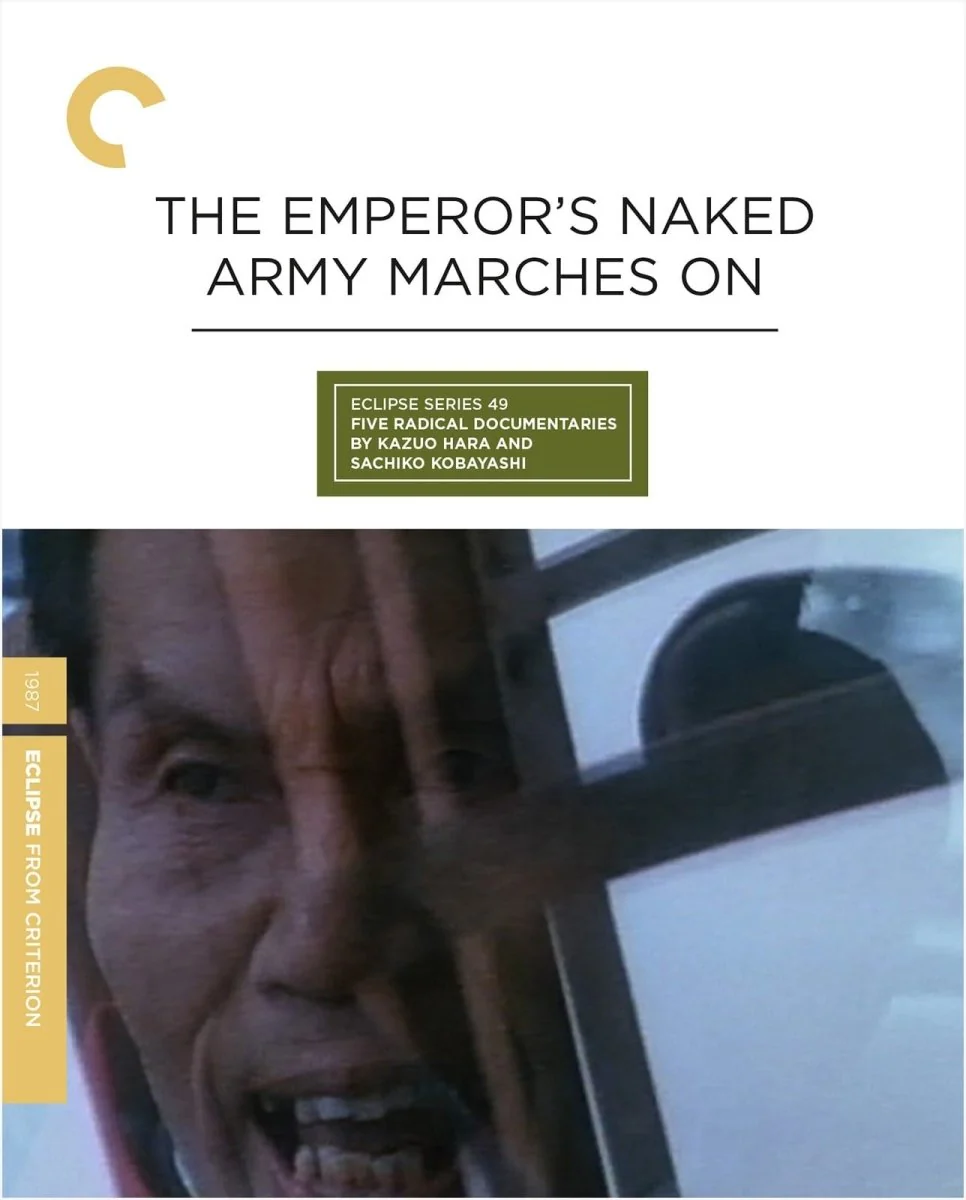
Kazuo Hara’s most renowned film is a harrowing confrontation with one of Japanese history’s darkest chapters. His unforgettable subject and collaborator in The Emperor’s Naked Army Marches On is Kenzo Okuzaki—a former soldier, convicted murderer, and defiantly antiestablishment agitator—who has made it his life’s mission to expose the crimes committed by Japanese officers against their own men in New Guinea during World War II. As Okuzaki resorts to extreme measures in his crusade to find out the truth, what emerges is at once a shocking piece of investigative journalism, a courageous condemnation of militarism, and a riveting portrait of a single-minded man driven by a raw fury bordering on madness.
Extreme Private Eros: Love Song 1974
When his first wife, the outspoken feminist Miyuki Takeda, announced that she was leaving him in order to find herself, Kazuo Hara began this radical documentary as a way both to maintain their complex relationship and to make sense of it. Assisted by his new partner, Sachiko Kobayashi, Hara is granted shockingly intimate access to Takeda’s wayward journey toward liberation, as she explores her sexuality, becomes a single mother, and grows increasingly disenchanted with traditional social structures. As complicated and uncompromising as Takeda herself, Extreme Private Eros: Love Song 1974 explodes the boundaries between subject and filmmaker to portray a woman willing to risk everything to live on her own terms.
Special Features
An essay by film scholar Markus Nornes
Product Information
Product Information
Shipping & Returns
Shipping & Returns
Description
Shocking, confrontational, and made with white-hot fury, these radical documentaries—directed by Kazuo Hara and produced by his wife and longtime creative partner, Sachiko Kobayashi—give voice to the outsiders and iconoclasts who wage war against the conformism of modern Japanese society. From a woman willing to risk everything on her journey toward personal and sexual liberation (Extreme Private Eros: Love Song 1974) to a man whose quest to expose Japanese wartime atrocities borders on madness (The Emperor’s Naked Army Marches On), the unforgettable subjects of these films are invited to be collaborators in Hara and Kobayashi’s process, resulting in works of unmatched power and immediacy.
Goodbye CP
An early documentary to portray the experiences of disabled people with compassion and complexity, Kazuo Hara’s searing debut is also one of the most unflinching films ever made about what it means to be an outsider. Produced in collaboration with the Green Lawn—a group of activists with cerebral palsy—Goodbye CP blends shot-on-the-fly footage of the members’ seemingly Sisyphean struggle to take their message to the streets with raw, sometimes confrontational interviews in which they reveal the torment of living in a society cruelly indifferent to their existence. In making his subjects active participants in the film—a practice he would continue—Hara powerfully asserts the humanity and agency of those who have long been denied both.
Sennan Asbestos Disaster
Made over the course of ten years, this epic work of activist cinema joins the citizens of Sennan, Osaka, as they embark on an uphill legal battle to receive reparations from the government for exposing them to the deadly toxins of the city’s asbestos factories. Through wrenching interviews with the victims, Sennan Asbestos Disaster paints a damning portrait of how decades of negligence exacted a devastating toll while revealing how the tragedy is deeply entwined with issues of class and anti-Korean discrimination. This galvanizing look at the power of collective action depicts what happens when ordinary people go up against an unfeeling, maddeningly slow bureaucracy in their unceasing fight for justice.
A Dedicated Life
Kazuo Hara’s interest in iconoclastic figures living in opposition to mainstream society led him to work on A Dedicated Life, a fly-on-the-wall portrait of the controversial novelist Mitsuharu Inoue, a sometimes charming, sometimes combative, often frustrating literary lion of postwar Japan. The project, however, soon spins off into unexpected directions, first when Inoue is diagnosed with terminal cancer, then when Hara discovers that the writer’s fictions extend to the fabricated details of his own life. As the ailing author confronts his mortality, Hara begins trying to separate the man from the myth, resulting in a layered portrait of a complex figure whose life was an extension of his art.
The Emperor’s Naked Army Marches On
Kazuo Hara’s most renowned film is a harrowing confrontation with one of Japanese history’s darkest chapters. His unforgettable subject and collaborator in The Emperor’s Naked Army Marches On is Kenzo Okuzaki—a former soldier, convicted murderer, and defiantly antiestablishment agitator—who has made it his life’s mission to expose the crimes committed by Japanese officers against their own men in New Guinea during World War II. As Okuzaki resorts to extreme measures in his crusade to find out the truth, what emerges is at once a shocking piece of investigative journalism, a courageous condemnation of militarism, and a riveting portrait of a single-minded man driven by a raw fury bordering on madness.
Extreme Private Eros: Love Song 1974
When his first wife, the outspoken feminist Miyuki Takeda, announced that she was leaving him in order to find herself, Kazuo Hara began this radical documentary as a way both to maintain their complex relationship and to make sense of it. Assisted by his new partner, Sachiko Kobayashi, Hara is granted shockingly intimate access to Takeda’s wayward journey toward liberation, as she explores her sexuality, becomes a single mother, and grows increasingly disenchanted with traditional social structures. As complicated and uncompromising as Takeda herself, Extreme Private Eros: Love Song 1974 explodes the boundaries between subject and filmmaker to portray a woman willing to risk everything to live on her own terms.
Special Features
An essay by film scholar Markus Nornes